

Pet First Aid Basics Every Pet Owner Should Know
Affiliate Disclosure: This post contains affiliate links. If you purchase through those links, we may earn a commission at no extra cost to you. We only recommend products we believe will be valuable to pet owners. Thanks for supporting Teefsy!
Accidents and health emergencies can happen when you least expect them. While professional veterinary care is always essential, knowing basic pet first aid can help you stay calm, reduce risk, and protect your pet until expert help is available.
This guide covers essential pet first aid basics every pet owner should know, along with practical tips to help you stay prepared at home.
Why Pet First Aid Knowledge Is Important
Pets can’t tell us when something is wrong, and small issues can escalate quickly if ignored. Basic first aid knowledge helps you:
- Respond faster during emergencies
- Prevent further injury
- Recognize when professional help is urgently needed
Having the right tools and information on hand can make a meaningful difference.
1. Build a Pet First Aid Kit
Every pet owner should keep a basic first aid kit at home.
Essential items include:
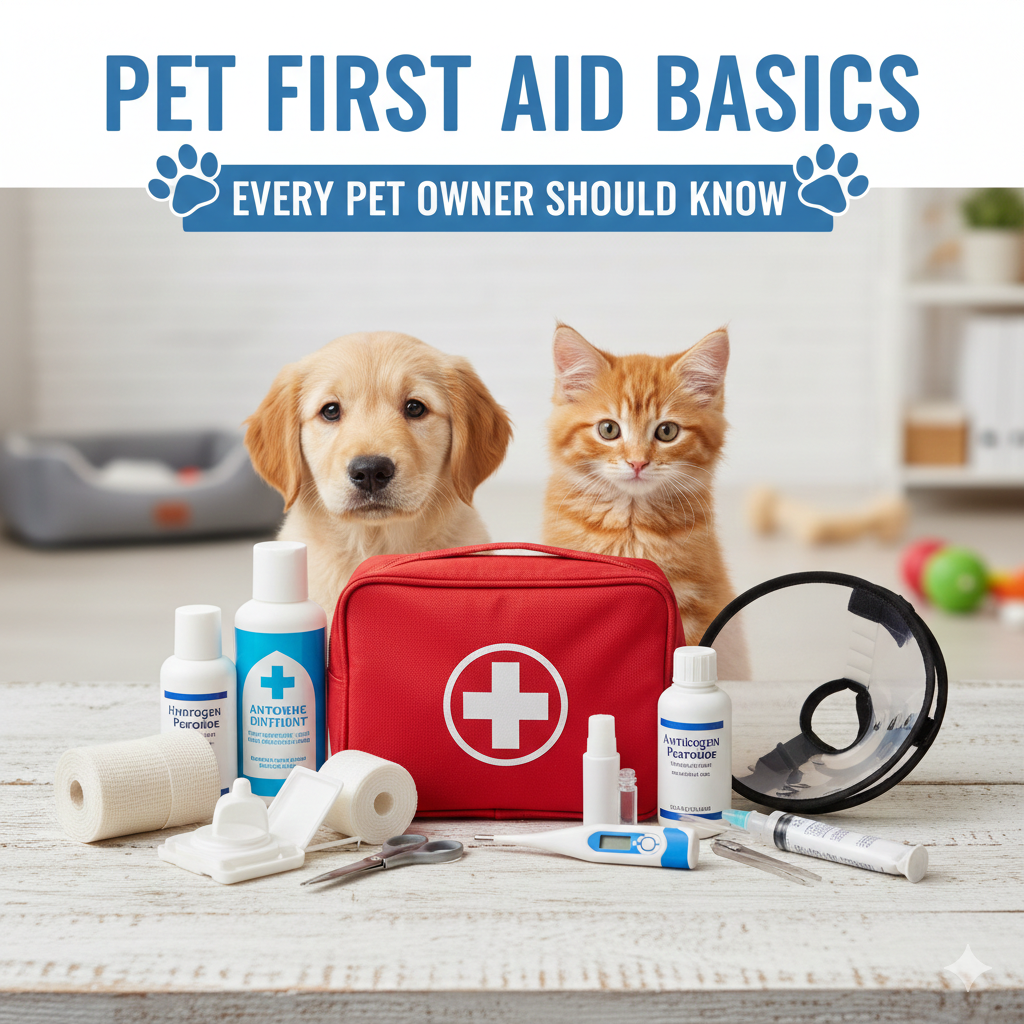
- Pet first aid kit
- Pet-safe antiseptic solution
- Sterile gauze and bandages
- Digital pet thermometer
- Tick removal tools
- Disposable gloves
Store your kit in an easily accessible location and check it regularly.
2. Know How to Handle Minor Cuts and Wounds
Small cuts and scrapes are common, especially for active pets.
Basic steps:
- Calm your pet and restrain gently if needed
- Clean the wound using pet-safe antiseptic
- Apply sterile gauze to stop bleeding
- Monitor for swelling, redness, or discharge
Seek veterinary care if the wound is deep or doesn’t heal.
3. Recognize Signs of Illness or Distress
Early detection can prevent serious complications.
Watch for:
- Sudden lethargy or weakness
- Vomiting or diarrhea
- Difficulty breathing
- Excessive scratching or licking
- Loss of appetite
If symptoms persist or worsen, consult a veterinarian immediately.
4. Handle Choking or Breathing Emergencies
Choking is a serious emergency that requires quick action.
If your pet is choking:
- Check the mouth for visible objects (do not force removal)
- Seek emergency veterinary care immediately
- Learn pet CPR and choking response techniques ahead of time
Training in pet CPR is strongly recommended for all pet owners.
5. Understand Poison Risks
Many common household items are toxic to pets.
Common dangers include:
- Human medications
- Certain plants
- Cleaning chemicals
- Chocolate, grapes, and xylitol
Save the pet poison control hotline number in your phone and keep it near your first aid kit.
6. Keep Emergency Contacts Ready
Preparation saves time in critical moments.
Have these readily available:
- Your regular veterinarian
- Emergency animal hospital
- Local animal poison control
- Trusted pet care professionals
Quick access to help can reduce stress and improve outcomes.
Final Thoughts
Knowing basic pet first aid doesn’t replace professional care, but it empowers you to respond confidently in emergencies. Preparation, awareness, and the right supplies can help protect your pet’s health and safety when it matters most.
Need Local Pet Care or Emergency Services?
If you’re searching for local veterinarians, emergency pet clinics, groomers, or other pet care providers, visit Teefsy.com to find trusted pet care services in your area quickly and easily.

Disclaimer
This article is for general informational purposes only and is not written by a veterinary professional. Always consult a licensed veterinarian or qualified pet care expert for medical advice, diagnosis, or treatment specific to your pet.